
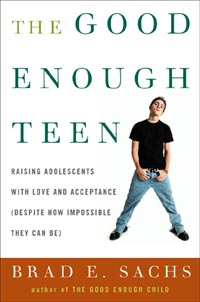
Preface
"Viewing teenagers as 'good enough' is likely to be much more difficult than it was when they were 'good enough' children. Parents who are increasingly frustrated by their teens' behavior and missed expectations should turn to Brad Sachs, a psychologist and parent of three, who offers help with the unique challenges of raising teens. The primary philosophy here: Bad behavior isn't administered as a way to make you miserable; it's a natural step on the path to maturity. The author begins by discussing the primary difficulties of being a teenager—namely, a teen's realization that his or her parents aren't all-knowing, and the shock that the world doesn't revolve around him or her. With entirely believable, and sometimes frightening, case studies (e.g., the girl with scratches covering her arms), Sachs walks through the family relations he's seen in his practice and offers concrete solutions for improving communication and expectations—not to mention behavior. He also includes exercises, checklists, and quizzes to help put into perspective the dynamics of parents' relationships with their teenagers. The author moves on to the 'good-enough parent,' the 'good-enough marriage,' and the 'good-enough divorce.' His tone is breezy, accessible, and understanding, even in discussing depression and drug use."
--Kirkus Reviews
"With the publication of THE GOOD ENOUGH TEEN, Dr. Sachs once again
establishes himself in the creative forefront of the parenting field."
--Jerrold Lee Shapiro, Ph.D., author of THE MEASURE OF A MAN
"Raising teenagers often prompts an array of questions and emotions from
parents. In this wonderful book Dr. Sachs presents practical insights and
advice to parents that will be of immeasurable assistance as they develop
more realistic expectations for their teens and themselves--expectations
that can be translated into more effective parenting practices. As in his
previous book "The Good Enough Child," Dr. Sachs' compassion and wisdom
shine through every page of this book. It is a book I highly recommend to
parents and professionals alike."
--Robert Brooks, Ph.D., Co-author of RAISING RESILIENT CHILDREN and THE POWER OF RESILIENCE;
author of THE SELF-ESTEEM TEACHER
"Psychologist Brad Sachs is a great storyteller and a natural teacher. The
Good Enough Teen lets parents sit at Dr. Sachs' feet, listening to the
absorbing stories of the families he has treated in therapy, and learning
from the inspirational wisdom he has gleaned from the many parents and teens
he has helped. I loved reading the book myself, and look forward to
recommending it to the families in my own clinical practice."
--Susan Heitler, Ph.D., author of THE POWER OF TWO: SECRETS TO A STRONG & LOVING MARRIAGE
"With compassion, intelligence, and humor, Dr. Brad Sachs has offered parents a reassuring strategy for finding a positive path through the difficult years of their offspring’s adolescence. His writing is clear and personal and his thinking grounded and insightful."
--James Garbarino, Ph.D., author of PARENTS UNDER SEIGE
|
Dr. Sachs’s newest book, THE GOOD ENOUGH TEEN: HOW TO RAISE ADOLESCENTS WITH LOVE AND ACCEPTANCE (DESPITE HOW IMPOSSIBLE THEY CAN BE) distinguishes itself from other books for parents of adolescents in the following important ways:
|